In the world of real estate investing, it’s easy to get mesmerized by the allure of appreciation. We’ve all heard the stories: someone buys a property in a hot market, and a few years later, its value has doubled, creating a small fortune on paper. This pursuit of rapid equity growth is exciting, but it’s also a dangerous gamble. True, sustainable wealth isn’t built on speculation; it’s built on a far more predictable and powerful metric: positive cash flow.
Focusing on cash flow over equity isn’t just a strategy—it’s a financial fortress. It’s the difference between owning a business and buying a lottery ticket. In any economic climate, whether booming or busting, properties that generate more income than they cost to own are the ones that survive, thrive, and ultimately build lasting fortunes.
What’s the Difference, and Why Does It Matter?
Before diving deeper, let’s clarify the terms at the heart of this strategy. First, it helps to understand the two core concepts.

A property with negative cash flow, where you have to pay out of your own pocket every month, isn’t an asset; it’s a liability. You are feeding it, hoping the market will bail you out with appreciation. A positive cash flow property, however, is a true asset that pays you to own it.
The Ultimate Stress Test: A Tale of Two Investors from the 2008 Crisis
History offers the clearest lesson on why this distinction is critical. Let’s look at the real-life scenario of two investors who purchased identical properties for $400,000 in 2006, just before the housing market’s historic collapse.
Investor A: The Equity Speculator This investor bought into the hype. They purchased a property in a trendy area with high price growth but low rental returns, resulting in a negative
cash flow of -$300 per month. Their entire strategy relied on the market continuing its upward climb. When the 2008 financial crisis hit, property values plummeted. Their tenant left, and with no rental income and a monthly deficit, they were forced to sell at a massive loss, and their net worth was wiped out.
Investor B: The Cash Flow Investor This investor ignored the hype and focused on the numbers. They found a property in a stable neighborhood that generated a positive cash flow of +$250 per month after all expenses. When the market crashed, the property’s paper value dropped significantly, which was unnerving. But crucially, the rental income still covered all the bills. They weren’t under any financial pressure to sell. They simply held on, collected their monthly profit, and weathered the storm.
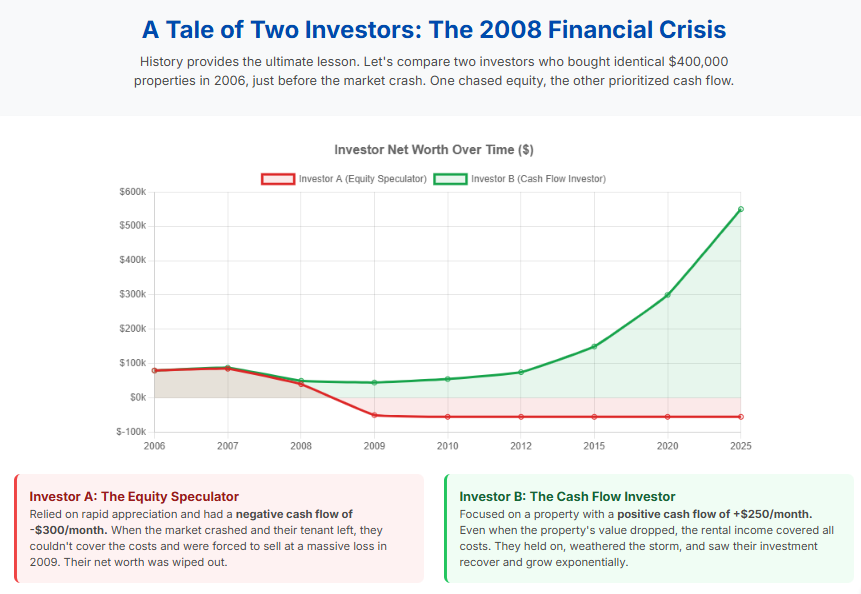
By the time the market recovered, Investor B was in an incredible position. They had not only survived but had spent years having their tenant pay down their mortgage. When appreciation returned, it was simply the icing on an already profitable cake.
The Multi-Pronged Wealth Machine
This is the true power of a cash-flowing asset. It doesn’t just build wealth in one way; it builds it from multiple sources simultaneously, creating a powerful, compounding engine for growth.
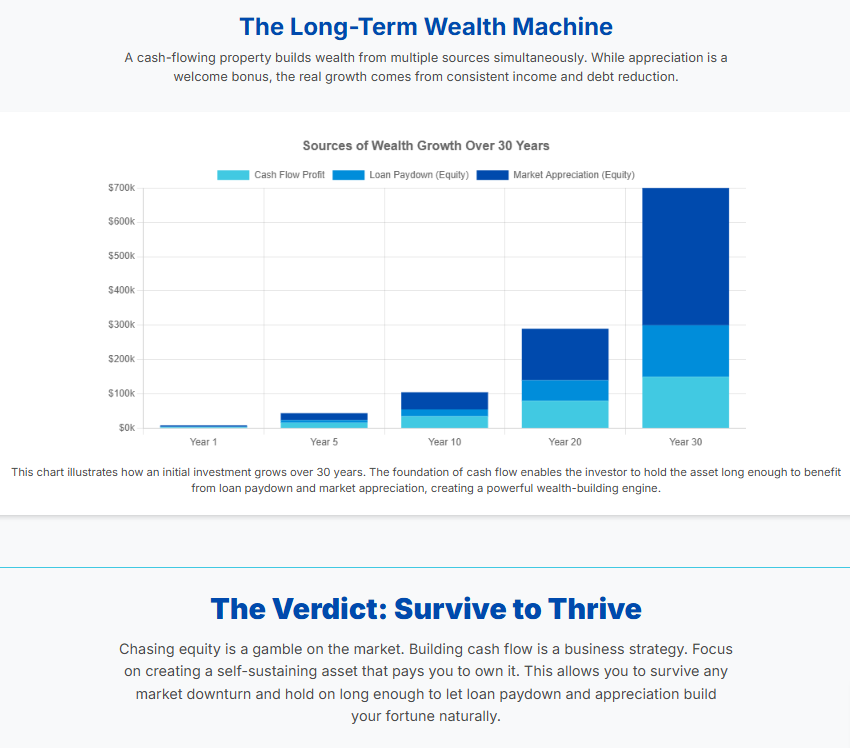
- Immediate Income (Cash Flow): From day one, the property generates profit, increasing your income and providing a buffer for unexpected expenses.
- Debt Paydown (Amortization): Every month, your tenant is paying down your mortgage for you. This builds your equity in a slow, steady, and predictable way, regardless of what the market is doing. This is forced equity building.
- Appreciation (Market Growth): Over the long term, well-chosen real estate tends to increase in value. Because cash flow allows you to hold the property indefinitely without financial strain, you have the luxury of time. You can ride out market cycles and let long-term appreciation work its magic naturally.
Conclusion: Survive to Thrive
You cannot control interest rates, economic downturns, or local market sentiment. Chasing equity is betting on factors entirely outside your influence. But you can control your numbers. You can analyze a deal to ensure the purchase price, rental income, and expenses will result in a monthly profit.
By prioritizing cash flow, you shift from being a market speculator to a business owner. You create a self-sustaining asset that provides security, income, and the staying power necessary to let long-term wealth-building forces do their work. The next time you look at a property, don’t just ask what it could be worth someday. Ask the most important question first: “Does it cash flow?”
